













For all the biggest game console hits in history, such as the PlayStation 2 and Nintendo Switch, there are also numerous flops. The biggest console flops have fallen by the wayside without making any notable marks in the gaming industry. All the biggest flops were flawed consoles for various reasons. These are seven of the biggest video game console flops in gaming history.
Nintendo Virtual Boy
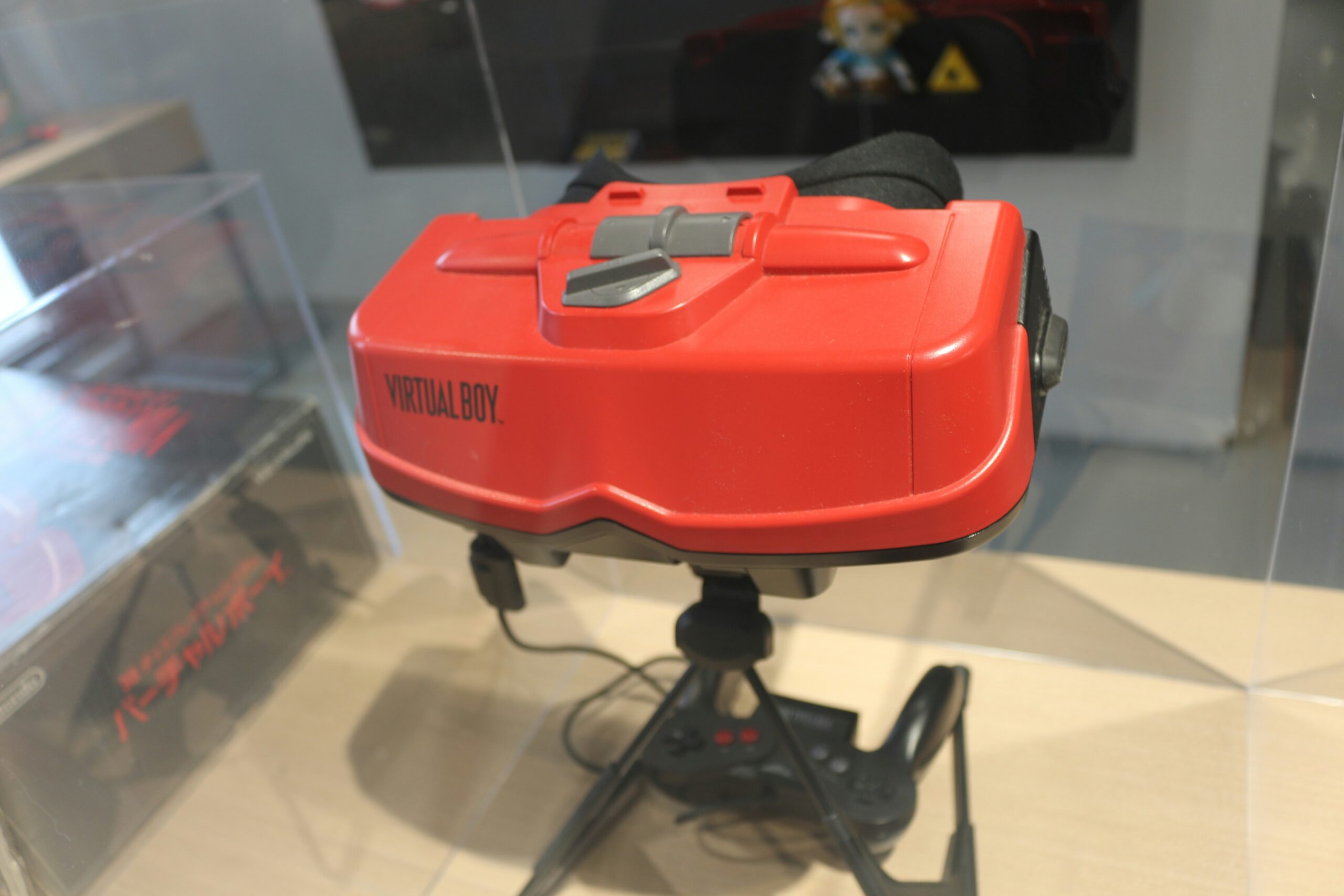
To start with, the Virtual Boy was the biggest Nintendo video game console flop by a considerable distance. In fact, Nintendo refuses to include the Virtual Boy on its IR Information page for console sales. Thus, official sales data for the VB console is unavailable, but the most widely cited Virtual Boy sales figure is 770,000 units for the console’s brief 1995-1996 shelf life.
The Virtual Boy was supposedly a portable VR-style headset for 3D games. Yet, its portability factor was evidently flawed because of its table-top design (the console wasn’t a handheld). The Virtual Boy’s games were 3D, but its limited red-and-black display was a turnoff at a time when full-color 3D games were a reality on the PlayStation and Saturn. Nor was there any third-party developer support for the Virtual Boy, with only 22 games ever released for it.
SEGA Dreamcast
The Dreamcast was SEGA’s final fling in the hardware industry that began quite well but ended in disaster. It had advanced 128-bit graphical capabilities for its 1999 time, was among the first to support online gaming, and boasted a strong launch lineup of games. Games like Sonic Adventure, Soulcalibur, and NFL 2K were among its most exciting launch titles that got the Dreamcast off to a strong start, especially in North America.
The Dreamcast faded quite quickly thereafter, even though there wasn’t necessarily that much wrong with SEGA’s video game console. The release of the Sony PlayStation 2, which boasted DVD playback and stronger developer support, was a big reason for the demise of the Dreamcast. Losing the support of EA, a crucial third-party publisher for the Genesis, hurt the Dreamcast. Gaming piracy also undermined the SEGA Dreamcast because of the console’s flawed copy protection.
Consequently, the Dreamcast didn’t quite take off and became a costly flop SEGA could ill afford. SEGA announced a withdrawal from the console business in 2001 and discontinued the Dreamcast in the same year. The Dreamcast wasn’t a complete flop, with approximately nine to 10 million unit sales, but it didn’t have enough impact to save SEGA in the console industry.
The Phillips CD-i
The Phillips CD-i was a home entertainment system marketed as a console. It was the first CD-based console designed for gaming, which also played music and movies. As an all-in-one multimedia console, it might have been ahead of its time.
However, being ahead of its time might have been the problem for the Phillips CD-i. Firstly, because the Phillips CD-i was much more expensive than the mainstream dedicated consoles of its era. The Phillips CD-i lacked a dedicated GPU for handling sprites, which made it unsuitable for fast action and platformer games. It also had slow loading times with its CD-ROM drive. Phillips even established a partnership with Nintendo, but Mario and Zelda games clearly didn’t work with the CD format.
Consequently, the Phillips CD-i became a failed compact disc gaming experiment before the rise of the PlayStation. Estimates highlight the console only shifted about 570,000 units before Phillips scrapped it. Phillips hasn’t released any game console since.
Jaguar
Atari has released numerous consoles, most notably the 2600, but the Jaguar was one of its biggest flops. The Atari Jaguar was marketed as a 64-bit console because it included a couple of 32-bit processors. It was technically superior to the foremost 16-bit consoles (SNES and Genesis) of its day. Yet, the Jaguar’s complicated architecture made it a hard console for developers to work with. Only a small minority of the Jaguar’s games showcased the console’s superior graphical capabilities over the SNES.
The result was a rather awkward console with production issues that struggled to attract much third-party developer support. Many developers preferred to devote themselves to the simpler, more popular 16-bit consoles of the time. The Jaguar did not sell well (fewer than 250,000 units), and Atari pulled the plug on the console in 1996 after the Saturn and PlayStation had hit the shelves.
Atari VCS (2021)
The Jaguar was a video game console flop that Atari has never recovered from. Atari attempted to re-enter the console market with the Atari VCS in 2021. However, that console was an even bigger flop than the Jaguar, with Atari discontinuing the Atari VCS near the end of 2022 to reorganize its hardware division.
The 2021 Atari VCS is a hybrid 2-in-1 home game console and PC. It is a console with preloaded classic Atari games that also supports modern Windows gaming. However, the Atari VCS specifications for modern gaming did not compare well to contemporary game consoles. It had an identity crisis because it did not make for a compelling retro console or a decent mini gaming PC.
Apple Bandai Pippen
Apple has never been much of a name in the console gaming industry. The Pippen was a rare Apple attempt to make a splash in the console industry that flopped quite quickly during the mid-1990s. It was another of those hybrid console/computer multimedia thingies designed for TVs. The Pippen was based on a modified Mac OS and included a CD-ROM drive.
The Apple Bandai Pippen attracted very little attention from game developers or players alike. Firstly, it was somewhat more expensive than alternative consoles, which was an instant turn-off for players. There was little point in purchasing an Apple console for which a very limited number of games were available, and none of them were particularly compelling. Estimated sales figures for the Pippen range from 42,000 to 43,000 units, making it one of the biggest product flops in Apple’s history.
Ouya
The Ouya was a Kickstarter (global crowdfunding) console project for which significant funding was raised. This was an Android-based console with a NVIDIA Tegra 3 processor that enabled players to play mobile-style games on TVs. It had an open digital store (Discover Store) from which developers offered free-to-play elements.
Alas, the Ouya never took off, and Razer scrapped it in 2015. Although it was a more economical video game console, it was underpowered with a processor for mobile gaming. There was a lack of compelling game content for the Ouya, with many titles being simple Android ports. Towerfall was one standout game for the Ouya, later ported to the most popular game consoles. The Ouya also had a poor controller and an awkward user interface to navigate.
Those video game consoles generally offered very little in terms of compelling gaming. The Dreamcast was the biggest hit (compared to the other consoles above), but even that still had a lack of support from major developers when Sony unleashed the PlayStation 2. They were generally consoles with flawed designs and concepts that didn’t appeal to developers or players.









You must be logged in to post a comment Login