


























A video game accessory is any device that augments or expands a gaming console’s functionality. It might be a novel controller, input device, or specialized peripheral designed to extend a console’s features. Such accessories date back to the earliest consoles, and some have been outright failures. Here are eight of the most ill-conceived video game accessories for consoles that flopped.
The Power Glove
In 1989, Nintendo was riding high—except for green-lighting the Power Glove as an official NES accessory. The Power Glove was a motion controller equipped with a keypad for input. This controller purported to allow players to control games with hand gestures and wrist movements.
The Power Glove looked cool and revolutionary, and initially sold quite well with the marketing hype surrounding it. However, players discovered the Power Glove didn’t work very well with slow and inaccurate controls that did nothing to enhance gameplay. Furthermore, there were hardly any games they could play with the Power Glove. Bad Street Gamer and Super Glove Ball were the only games specifically designed for it.
The SEGA 32X
The SEGA 32X was a hardware upgrade add-on for the 16-bit Genesis (Mega Drive) console that enabled cheap 32-bit gaming. Players inserted the SEGA 32X into the cartridge slot for the Genesis to play games with superior graphics. This add-on had 3D polygon rendering capabilities and could display many more colors simultaneously than the Genesis. It enabled SEGA and other developers to release more graphically advanced games, such as Virtua Fighter and Virtua Racer, for the Genesis.
Yet, the SEGA 32X add-on quickly became obsolete as SEGA released it only a few months before the Saturn. With next-generation consoles soon to be released, third-party developers widely snubbed the 32X. Consequently, there were few games available for the 32X, and SEGA scrapped the add-on to focus on the Saturn in 1996.
R.O.B
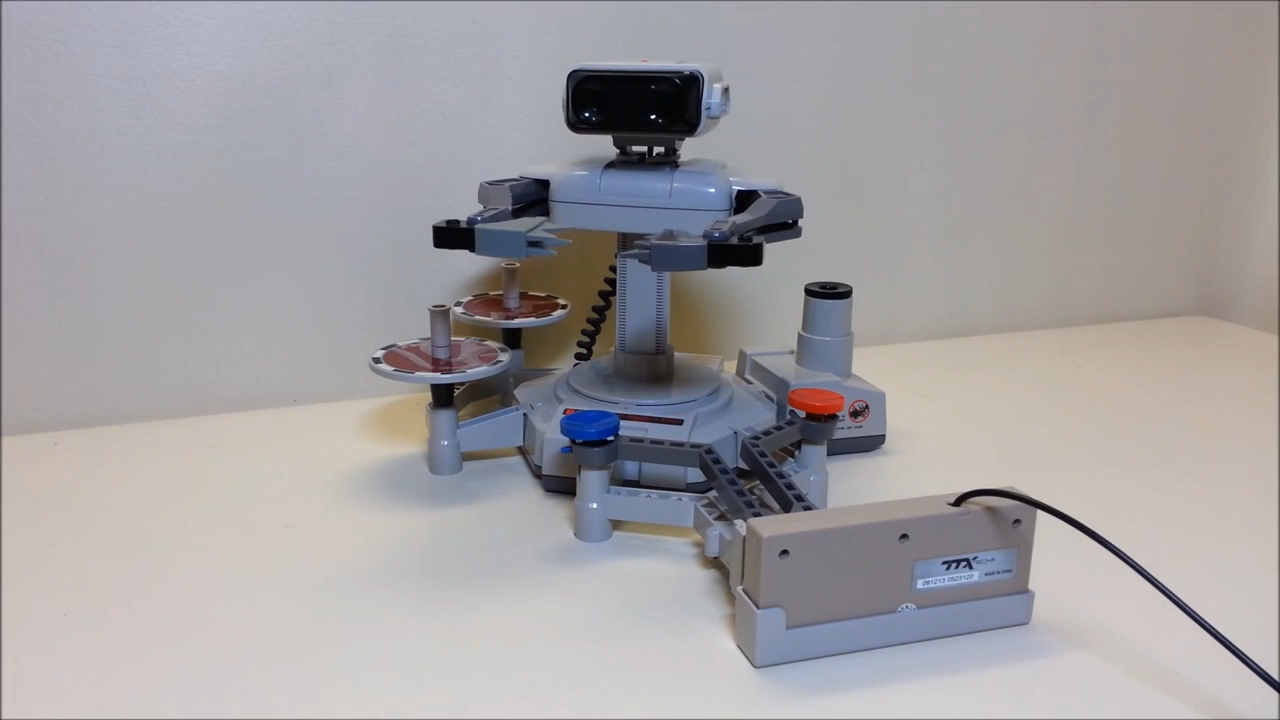
R.O.B was perhaps one of the most curious video game accessories ever seen. It was a toy robot that came bundled with the NES in 1985. R.O.B grabbed and placed spinning gyro tops on a tray that pressed buttons on secondary NES gamepads in response to game screen flashes.
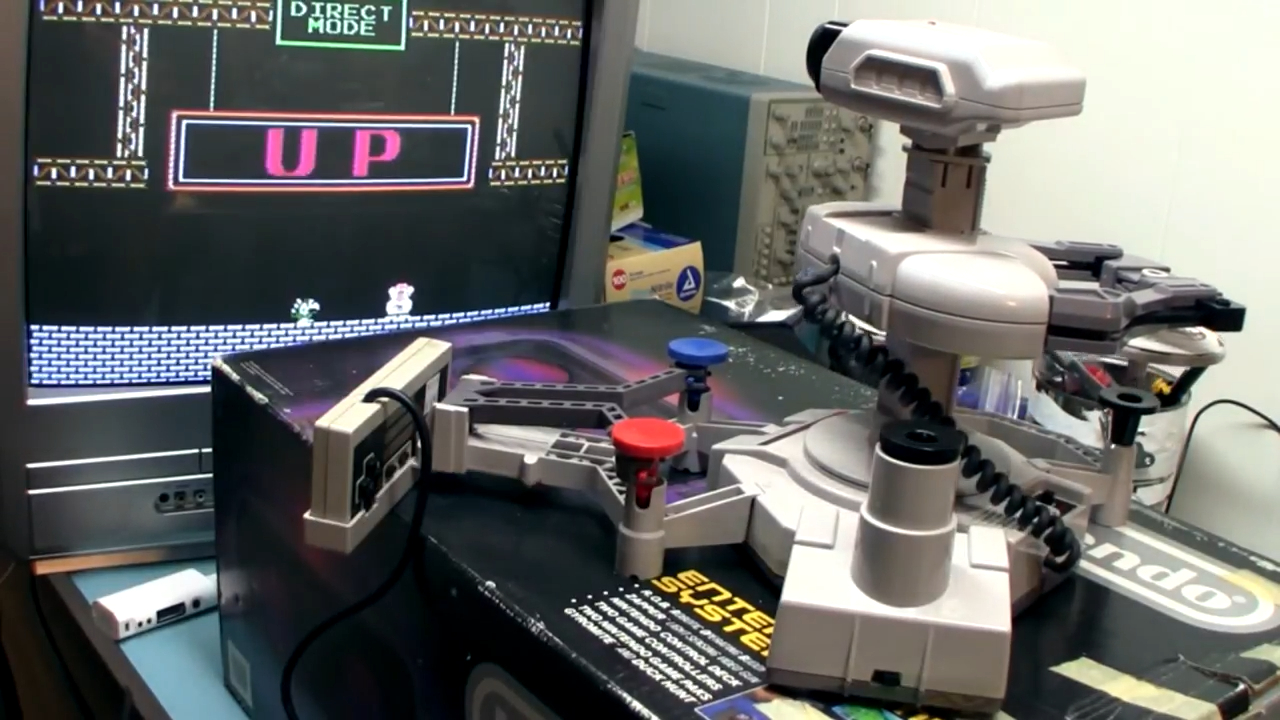
However, R.O.B was extremely slow, cumbersome, and had redundant functionality. Gyromite and Stack-Up were the only NES games that ever utilized R.O.B. So, R.O.B never became a serious gaming accessory in that respect. Yet, R.O.B was still an effective Nintendo marketing gimmick as it helped sell the NES as a toy at a time when consoles were out of favor among retailers in North America.
SEGA-CD
The SEGA-CD was another somewhat misguided video game accessory for the Genesis. This was a CD-ROM drive add-on for the Genesis that enabled developers to release compact disc games, such as the notorious Night Trap and Road Avenger with Full Motion Video (FMV). It also boasted multimedia capabilities for playing audio CDs and watching movies.
Although the SEGA-CD had a bit more impact than the 32X, it was clearly a flawed add-on. Firstly, because it didn’t offer great value at a high price comparable to the Genesis console. It also had its technical limitations because the Genesis still handled video output, which generated bottlenecks between the console and the SEGA-CD. The quality of SEGA-CD games was a very mixed bag, with many mediocre FMV titles that didn’t excite players.
Konami LaserScope
The Konami LaserScope was a not-so-amazing voice-activated firing gaming accessory for the NES. It was a head-mounted light gun for playing Duck Hunt, Laser Invasion, and other target shooting games. This accessory enabled players to blast away targets with voice commands rather than a trigger.
The Konami LaserScope was among the most awkward video game accessories in history. Players had to shout quite loudly to get it fired. This accessory’s voice recognition was weak, as laughing or heavy breathing could also make the LaserScope fire. Its head-mounted aiming was also somewhat inaccurate in comparison to the NES Zapper. Most players preferred to stick with the NES Zapper.
The SEGA Activator
Activator was a full-body motion controller that SEGA released for the Genesis in 1993. The controller took the form of an octagonal shape that players placed on the floor. It had infrared lasers that enabled players to play games with full-body movements. Activator commercials showed players doing roundhouse kicks for the beat ’em up games.
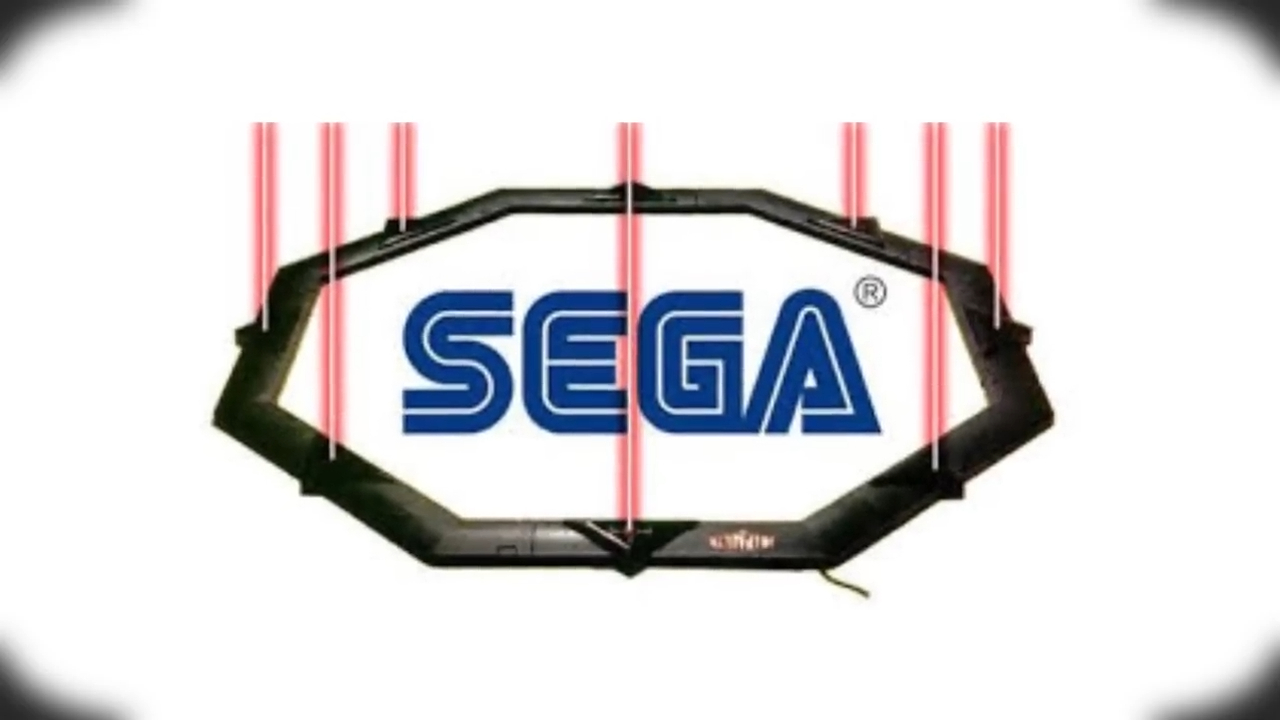
However, the Activator didn’t work well at all. Its infrared sensors were not very accurate and sometimes even failed to register moves or trigger unintentional ones. Players needed to extensively calibrate the Activator to minimize environmental interference (such as room lighting) that distorted IR beams. It was also a highly-priced gaming accessory that quite simply wasn’t worth it. Most players had the sense not to get an Activator, which SEGA discontinued in 1994.
The U-Force
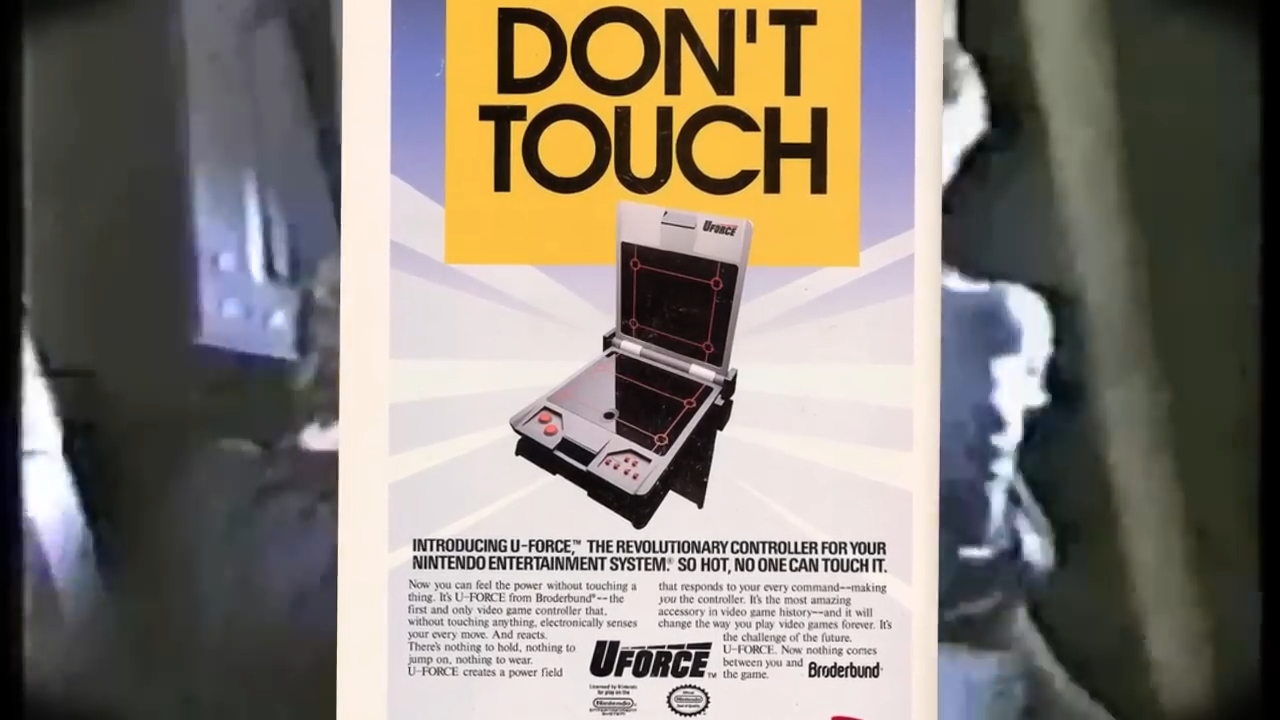
The U-Force for the NES was another of those motion-sensing controller video game accessories. It was a controller with two hinged sensor-filled panels. Players controlled games by moving their hands in the air through the U-Force’s sensor panels.
The shortcomings of the U-Force were similar to those of the SEGA Activator. It had ineffective and inconsistent infrared sensors that often failed to detect hand movements or register wrong inputs. Exaggerated movements were often needed for the U-Force to work, which made it very hard to play games that required more precise control. Consequently, the U-Force is among the worst game controller video game accessories released.
Those video game accessories were novel game controllers and console add-ons that had little impact in the gaming world. The U-Force, Power Glove, Konami Laser Scope, and SEGA Activator were flawed controller accessories. Add-ons like the 32X and SEGA-CD for turbocharging the Genesis didn’t attract much developer support or many players. Nintendo’s R.O.B only had two supported games, but it did at least convince more U.S. retailers to stock the NES alongside toys.











You must be logged in to post a comment Login