













Nintendo and Sony are the most influential companies in video gaming history. It is perhaps ironic that Nintendo snubbed a potential partnership with Sony in the 1990s for a SNES CD-ROM drive add-on. That split turned Sony into Nintendo’s fiercest competitor in the video gaming industry. The Nintendo vs. Sony console wars have redefined modern video gaming. This is a story of the Nintendo vs. Sony console wars dating back to the 1990s.
Sony Launches the PlayStation
The Nintendo vs. Sony console wars began when Sony launched the PlayStation in 1994. That was Sony’s response to Nintendo’s humiliation of establishing a Philips partnership. The PlayStation was based on CD-ROMs, which were cheaper than cartridges and also offered much more storage space. With games like Final Fantasy VII, Metal Gear Solid, Ridge Racer, Tomb Raider, and Tekken 3, the PlayStation was a huge hit, selling more than 100 million units.
Nintendo’s response to the PlayStation was the N64. That was a 64-bit console based on cartridges, which offered loading speed advantages over CD-ROMs. This console had great 3D Nintendo and Rare titles like Mario 64, GoldenEye 007, Perfect Dark, Ocarina of Time, and Majora’s Mask. However, it depended too heavily on Nintendo games, as many third-party developers snubbed the N64 in favor of the PlayStation. A delayed release didn’t help the console much either. The N64 sold about 32.93 million units, significantly less than the PlayStation.
PlayStation 2 Breaks Records
The PlayStation 2, launched in 2000, marked the second instalment of the Nintendo vs Sony console wars. Sony’s PlayStation 2 boasted DVD player support, enabling players to watch movies, a major selling point for the PS2. It was also backed by an extensive library of exclusive hits like Metal Gear Solid, Grand Theft Auto, Silent Hill 2, Final Fantasy X, and God of War 2. Sony’s second console broke records by selling more than 155 million units.
Nintendo’s GameCube was a lightweight alternative to the PlayStation 2 based on mini-DVD optical discs. It also largely ignored the emerging online multiplayer gaming scene. Although it had some great games, like Metroid Prime, Wind Waker, Smash Bros. Melee, and F-Zero GX, the GameCube struggled to match the all-conquering PlayStation 2. The GameCube sold about 21.4 million units, making it a relative flop by Nintendo standards.
Nintendo Fights Back With the Wii
With Nintendo reeling from the PlayStation juggernaut, the big N launched a big fightback with a Blue Ocean Strategy that targeted a wider non-gamer demographic. The Wii was the result of this strategy, a console with intuitive motion-controlled Wii Remotes. It was a console with a broader demographic appeal that was somewhat cheaper than Sony’s PlayStation 3. The Wii also boasted games like Mario Galaxy 1 & 2, Zelda: Twilight Princess, Metroid Prime: Trilogy, Super Smash Bros. Brawl, and Xenoblade Chronicles. With its unique motion controls and great games, the Wii was one of Nintendo’s biggest console hits, selling about 101.63 million units.
Sony focused more on raw graphics power for the PlayStation 3. That console came with a hefty price tag, which made it less appealing for players. The PlayStation 3 had a weak launch and never caught up with the Wii.
PlayStation 4 Reigns Supreme
PlayStation 4 vs Wii U was the fourth instalment of the Nintendo vs. Sony console wars. Nintendo launched the Wii U in 2012, which confused players from the outset. Some players thought it was more of a tablet upgrade for the Wii rather than a new console. The GamePad tablet gimmick the Wii U was based on was a rather clunky accessory with short battery life. The Wii U’s underpowered hardware put off many third-party developers. Consequently, the Wii U was one of Nintendo’s biggest flops, as a console that sold 13.56 million units.
In comparison, the PlayStation 4 was a massive hit with the top-tier hardware specifications it offered at a more accessible price than its predecessor. Sony focused purely on gaming for the PlayStation 4, rather than more general multimedia, with a “For the Players” slogan. With hit exclusives like God of War, Spider-Man, and The Last of Us Part II, the PlayStation 4 was another big hit for Sony that sold about 117 million units.
The Nintendo Switch Revolution
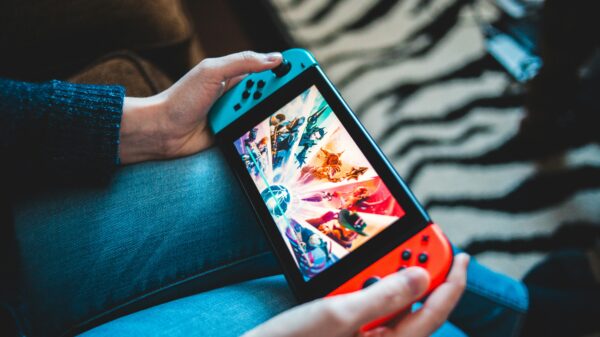
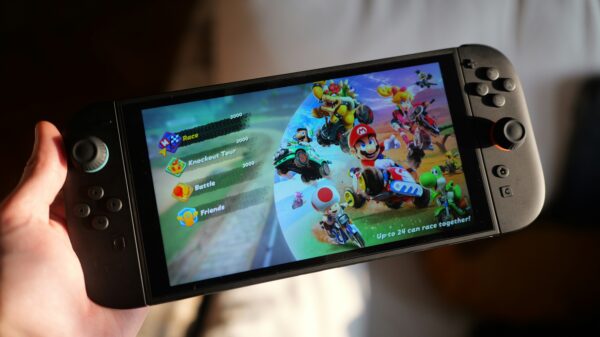
The most recent full chapter in the Nintendo vs. Sony console wars began in 2017 when the big N rolled out the Switch. Rather than release a traditional home console, Nintendo boldly merged its portable and home console divisions to launch the Switch. The Switch was a handheld console that players could play on TVs. That new gaming flexibility was a masterstroke, blending premium gaming with handheld convenience. The Switch is now Nintendo’s biggest console hit in history, having sold 159.6 million units.
Sony’s response to the Switch was the PlayStation 5, still the current Sonny flagship, released in 2020. However, the Switch vs. PlayStation 5 was not a traditional direct console war because they targeted different gaming styles and market areas. The PlayStation 5 has been a massive hit with more than 95 million units shipped, but the Switch has clearly outsold it.
So, the Nintendo vs. Sony console wars seemed to have settled into a kind of peaceful coexistence. There were times when it seemed Sony might squeeze Nintendo out of the console industry, but the big N found ways to fight back with new gaming innovations. Today, Sony and Nintendo have radically different gaming marketing strategies, and Microsoft is the most likely of the big three to withdraw from the console business.










You must be logged in to post a comment Login