































Atari was, for a time, a giant in the video gaming industry before a catastrophic 1983. The Atari gaming juggernaut never genuinely recovered from the 1983 video game slump, but battled on against Nintendo and SEGA into the 1990s before exiting the hardware business. Today, the Atari legacy is one of both great retro gaming and calamitous blunders. These are the biggest Atari gaming blunders in history.
Releasing a Trashy E.T. the Extra-Terrestrial Game
E.T. was a blockbuster movie that Atari paid an estimated $20-$25 million to secure game rights for in 1982. However, the extended length of corporate game rights negotiations restricted ET game development time to five weeks, with an Xmas release date set. The result was a disastrously poor ET game with frustrating and confusing mechanics.
Nevertheless, Atari anticipated record-breaking demand for the game because of its ET movie brand. Millions of unsold and player-returned (refunded) ET game cartridges filled Atari’s warehouses. Atari had to bury thousands of unsold ET cartridges in a New Mexico landfill. This Atari gaming blunder was a catalyst for the video game crash of 1983.
Turning Down Nintendo
Atari was close to finalizing a partnership with Nintendo for distributing and marketing its popular Famicom console in the USA under its own name in 1983. This would have enabled Atari to sell the Famicom (later rebranded NES) in the USA, with royalties paid to Nintendo.
However, the whole deal fell through when Atari saw Donkey Kong running on a Coleco Adam computer. Atari’s leadership misinterpreted the port as a breach of contract and paused negotiations with Nintendo. When the misunderstanding was ironed out, Atari’s potential partnership with Nintendo still collapsed after the departure of its CEO. Consequently, Nintendo ventured into the USA alone with a rebranded NES Famicom console that conquered Atari’s home country.
Losing Tetris Rights
Atari’s Tengen subsidiary thought they had official Tetris console rights in 1989, but then it turned out it didn’t after Henk Rogers and Nintendo directors visited ELORG in Moscow. Andromeda’s Robert Stein also visited Moscow in an attempt to secure Tetris handheld rights. This represented a window of opportunity for Stein and Atari to secure Tetris rights for the Lynx. However, Tetris became a killer game for the Game Boy after Nintendo secured exclusive rights to it.
To rub salt in, Nintendo sued Atari for copyright infringement when it continued to roll out Tetris cartridges for the NES. However, Atari still wrongly believed it held valid Tetris console rights. Atari lost the legal battle over Tetris, forcing its game version off the shelves.
The Jaguar Fiasco
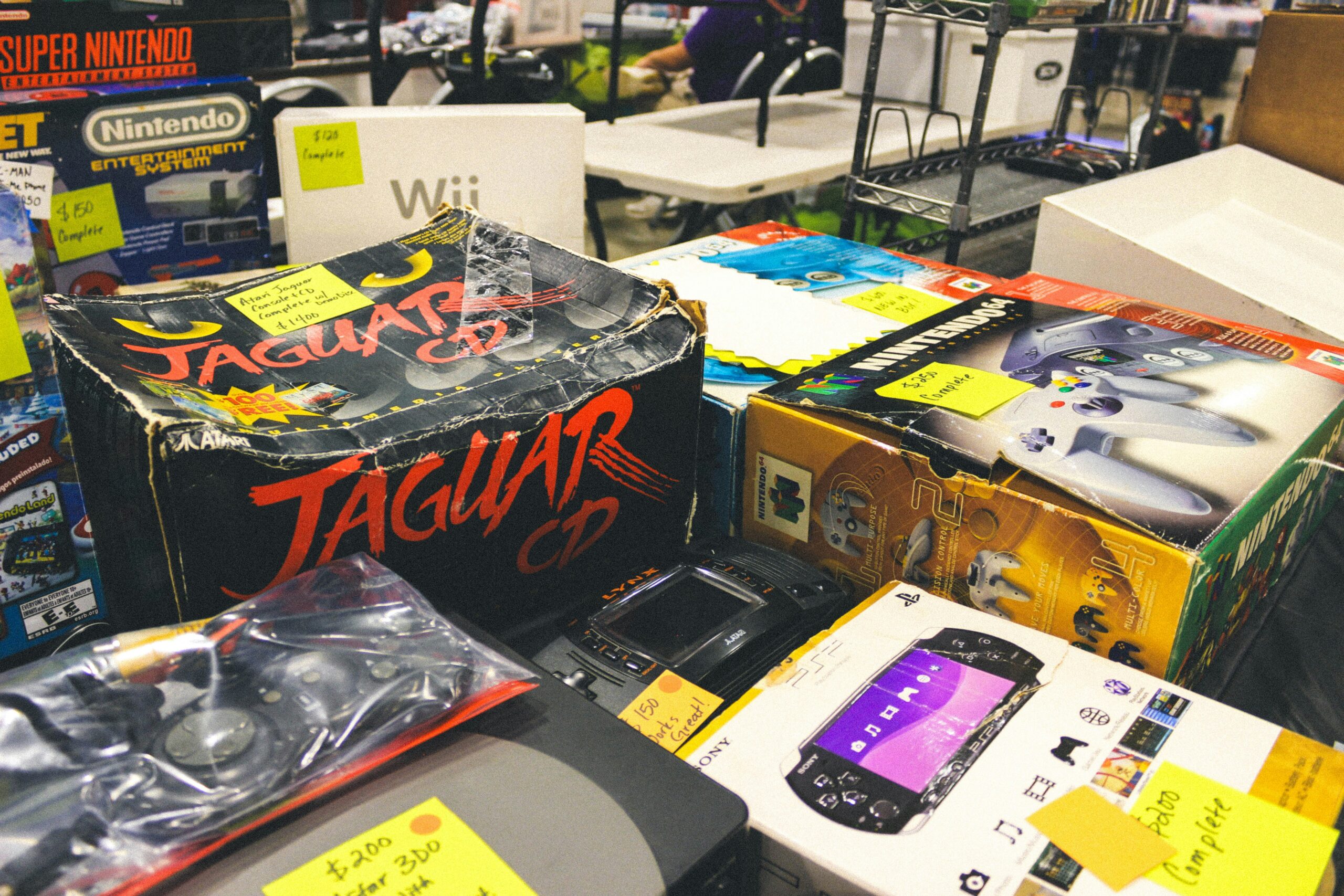
When Atari released the Jaguar in 1993, it was touted as the first 64-bit console with its two 32-bit RISC chips and Motorola processor. This console had a 64-bit data bus, but the Jaguar’s complex architecture was a nightmare for developers to get to grips with. Most developers preferred to release games for the 16-bit consoles or default to the Jaguar’s baseline Motorola processor.
Consequently, the Jaguar lacked the third-party developer support it badly needed to sell it. Many of those games released for it looked little better than slightly upgraded 16-bit game ports. Only a minority of titles, like Tempest 2000 and Alien vs. Predator, fully exploited the Jaguar’s superior hardware. The Jaguar shifted less than 250,000 units, and Atari withdrew from the hardware business after this blunder.
Forcing its Best Programmers Out
The Warner Communications acquisition of Atari in the late 1970s changed the company’s culture, which alienated some of its foremost game programmers. When a group of Atari programmers asked for more royalties and public credit, the management declined such requests. Consequently, four of its programmers left Atari and founded Activision to release popular games for the 2600 console. This exodus drained Atari’s innovative gaming edge as the company became increasingly marketing-obsessed.
Purchasing the Lynx
Atari purchased manufacturing rights to the Lynx console designed by Epyx in 1989. Although a technical handheld marvel for its time with a full-color backlit display, the Lynx had its faults. The expansive, bulky design and limited battery economy of the Lynx undermined its portability. The vast majority of players snubbed the Lynx in favor of the Game Boy, which was a handheld that offered much better battery and portability value along with Nintendo games. Losing Tetris to Nintendo also fatally undermined the Lynx.
The Atari 5200 Flop
The Atari 5200 was the successor to the 2600, with superior sound, better colors, and sharper graphics than its predecessor. However, it was also a console with awkward non-centering analog joysticks without any backward compatibility for 2600 games. The Atari 5200 also needed a lot of space because of its massive, bulky design.
With such shortcomings, the Atari 5200 was a significant console flop. The Atari 5200 sold about one million units before Atari discontinued it in 1984. It was the catalyst for the decline of Atari gaming.
Releasing the Modern Atari VCS
A resurrected modern Atari iteration launched the Atari VCS in 2021. Yet, this hybrid PC and retro console fell a long way short of a triumphant comeback for Atari. The VCS offered limited PC hardware for an inflated price, clunky software, and a complete lack of exclusive games.
Atari hasn’t officially revealed hardware unit sales for the Modern Atari VCS. However, Atari cancelled manufacturing deals for the VCS in 2022. Thus, the Atari VCS never really took off as any kind of viable alternative to Nintendo, Sony, Valve, or Microsoft consoles.
The biggest Atari gaming blunders above handed the keys of the industry to its competitors. Although Atari didn’t necessarily lack technological innovation, a lack of corporate empathy and confused strategic vision let the company down at key times. Atari survives today primarily as a retro gaming nostalgia brand, with players discovering the relaunched 2600+ and 7800+ consoles.













You must be logged in to post a comment Login