





















Nintendo is one of the most influential game companies in history because it has redefined gaming on the go since the 1980s. The big N pioneered portable consoles and has consistently prioritized innovation as it expanded its handheld line. Nintendo handhelds have been a masterclass in creative engineering. This is how the evolution of Nintendo handhelds redefined the gaming industry.
The Game and Watch
The Game and Watch was the first Nintendo handheld in history. Gunpei Yokoi was the Nintendo engineer who invented the Game & Watch Line of handhelds in 1980. That was a series of dedicated handhelds based on single video games and LCD technology. However, it was handheld series that relied on limited fixed-segment liquid crystal displays (like digital watches), which restricted its games to simple gameplay loops.
Primitive though the Game and Watch seems today, it was a big hit back in the 1980s. The best G&W games were Nintendo classics like Donkey Kong and Super Mario Bros. Later Game and Watch handhelds also pioneered directional pad controls and clamshell designs. The Game & Watch series sold more than 43 million units, putting Nintendo on the gaming map before the Famicom hit the shelves.
The Game Boy Revolution
However, the real portable gaming revolution began when Nintendo unleashed the Game Boy in 1989. Although a big step up over the Game and Watch, the Game Boy was still a rather primitive handheld with its olive green monochrome display. Nintendo was unfazed by the likes of Atari pushing out full-color handhelds at the same time.
The advantage of the Game Boy’s monochrome display was battery life, which was crucial to the concept of portability and gaming on the go. While the Lynx and the Game Gear burned through batteries in a few hours, the GB had a 30-hour battery duration. The Game Boy was also a cheaper alternative to the Lynx and Game Gear.
However, the Game Boy still needed a killer game to sell it, and Tetris was it. The addictive Tetris puzzler phenomenon was perfect for gaming on the go. With Tetris bundled with it, alongside popular Nintendo franchises, the Game Boy was a massive global hit. It defined the Nintendo philosophy of gameplay over graphics, with games based on responsive controls and fun gameplay mechanics.
Nintendo later upgraded the Game Boy with the Game Boy Color iteration in 1998. That was a more colorful Game Boy that could display 56 colors simultaneously. However, it retained backward compatibility with original Game Boy games. With the GBC included, the Game Boy sold 118.69 million units.
16-Bit Portability
In 2001, the evolution of Nintendo handhelds continued with the release of the Game Boy Advance. The GBA was a huge leap forward from the original Game Boy as a handheld based on 32-bit architecture. However, it was widely regarded as a portable 16-bit console because its 2D graphical quality was very comparable to the Super NES.
So, it’s not surprising that Nintendo ported many of the best Super NES games to the Game Boy Advance. The Legend of Zelda: A Link to the Past, Super Mario World, Donkey Kong Country, and Super Mario World 2: Yoshi’s Island were some of the best games for the Game Boy Advance. So, the Game Boy Advance was more like a SNES in your pocket for gaming on the go.
The Dual-Screen and Touch Phenomenon
Nintendo broke away from its Game Boy line by releasing the 3DS in 2004. The DS was a big step in the evolution of Nintendo handhelds because of the unique dual-screen layout it introduced. It was a portable based on a stylus-driven touchscreen, which some critics dismissed as a bizarre gimmick.
Yet, the Nintendo DS was one of Nintendo’s biggest console hits, selling 154.02 million units worldwide. With its dual-screen layout and touchscreen, it expanded what games could be with titles like Nintendogs. Games like Zelda: Phantom Hourglass and Kirby Canvas also redefined gaming with their touchscreen controls.
The Nintendo 3DS was an evolution of the DS that introduced a 3D angle. This portable handheld delivered true glasses-free 3D gaming. It was the first truly portable dedicated 3D handheld with games like Ocarina of Time (ported from the N64), Super Mario Land 3D, and Mario Kart 7, and Luigi’s Mansion 2 Dark Moon showcasing the console.
Blurring the Lines: From Portable to Hybrid
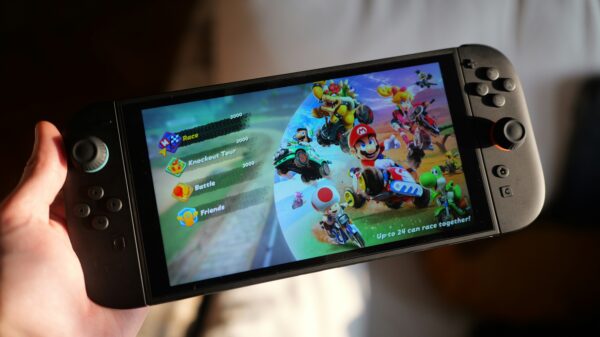
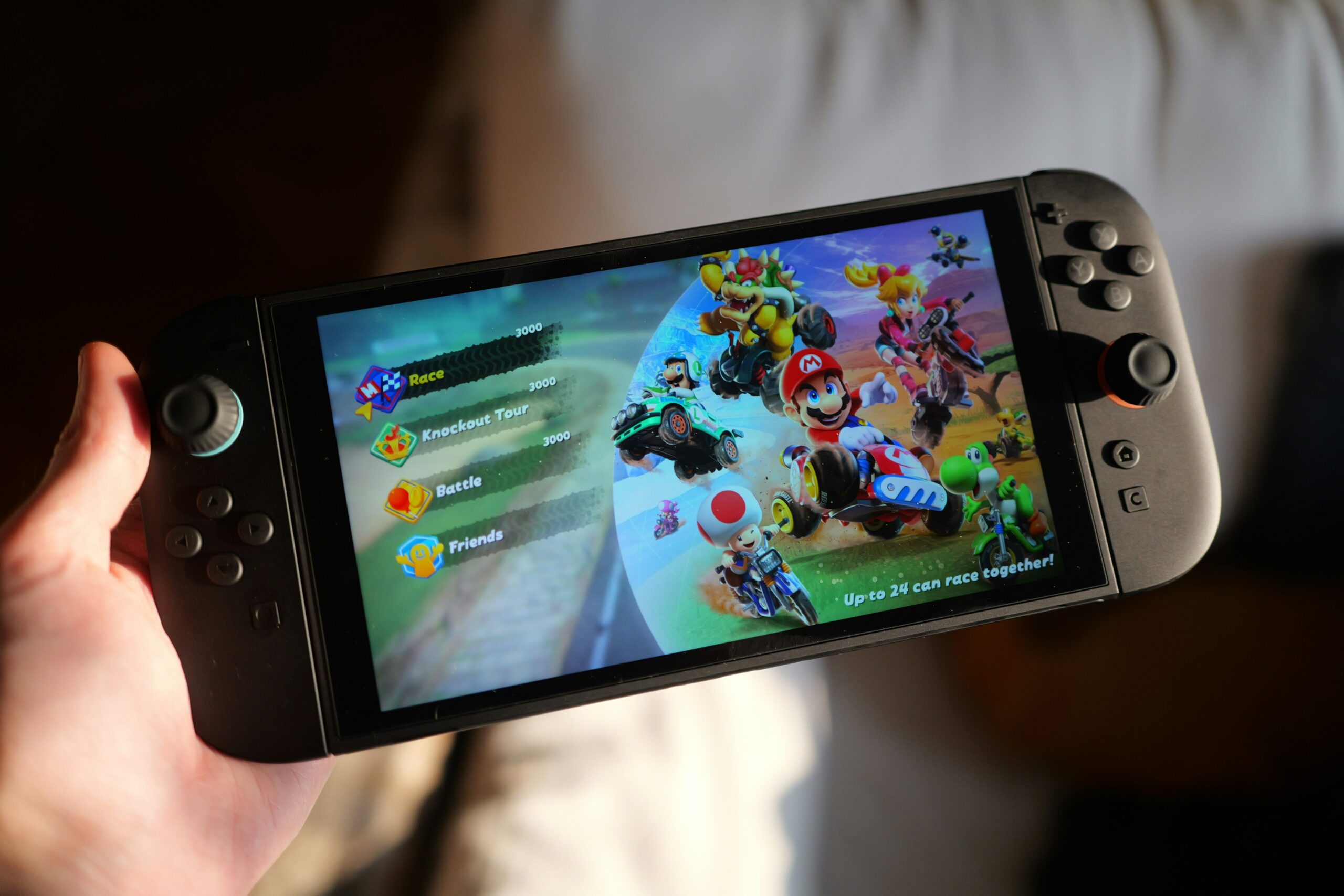
With managing home console and handheld development pipelines straining Nintendo’s resources, the big N struck upon an ingenious solution with the Switch. The Switch was the ultimate evolution of Nintendo handhelds that unified the home console and handheld gaming worlds. This was hybrid portable handheld that was also a home console players could connect to TVs.
The Switch sparked a genuine gaming revolution by shattering the barrier between portable and home consoles. Its hybrid design and versatility enabled players to play anywhere, making it the most flexible console in history. With terrific games like The Legend of Zelda: Breath of the Wild, Mario Odyssey, Mario Kart 8 Deluxe, and Smash Bros. Ultimate, the Switch became one of the highest-grossing consoles in history, only eclipsed by the PlayStation 2.
So, it came as no surprise that Nintendo rolled out a Switch 2 successor in 2025. That’s a hybrid portable console much the same as its predecessor. However, it represents a significant generational leap over its predecessor with vastly superior graphics and a redesigned controller connection system.
The Switch completed the evolution of Nintendo handhelds by merging portable and home consoles. Yet, it might have also unwittingly killed dedicated single-purpose handheld consoles in the process, for which Nintendo has always been a market leader. Nintendo’s handheld division had sometimes been a salvation for the big N when its home consoles fell short. With the Switch merging the home and portable lines, Nintendo no longer has the traditional two-pillar backup strategy. Nevertheless, history shows us that Nintendo has always been the king of handheld gaming.














You must be logged in to post a comment Login