


























Mobile gaming is bigger than console gaming in terms of player count and revenue market share. There are billions of mobile players, but the worldwide console audience is estimated to be at more like 645 million. However, are smartphones and tablets really better for gaming than consoles? They are, after all, multipurpose devices rather than dedicated gaming platforms. This is how consoles and mobile gaming compare across several categories.
Value: Mobile
When it comes to value, mobile gaming is a clear winner over consoles. Although it is a true that some flagship mobile devices can eclipse consoles for cost, the huge volume of freely available Android and iOS games makes it somewhat cheaper to play games on them. Mobile gaming is primarily based on the free-to-play model of in-app purchases and ads. In comparison, a newly released AAA game for the PlayStation 5 typically retails for about $69.99.

Nor does everybody necessarily purchase mobile devices for gaming. Some smartphones can be more pricey because they’re multipurpose devices for photography, listening to music, making calls, browsing, video playback, and much more besides. So, in a sense, the gaming aspect of mobiles is a great extra bonus.
Gaming Choice: Mobile
Mobile devices also have the edge over consoles when it comes to gaming. There can be no doubt that the Android mobile gaming library is substantially larger than any console alternative, with hundreds of thousands of game apps on the Google Play. In comparison, the Nintendo Switch might have something like 4,500 to 5,000 games in its library. So, mobile players are spoiled for gaming choice, and the number of premium Windows PC/console games ported to smartphones and tablets is also increasing.
Graphical Quality: Console
Although mobile gaming has made great graphical strides in recent years, home consoles remain some way ahead in terms of visual fidelity and cinematic immersion. Consoles are, after all, dedicated gaming beasts with larger graphical processors and cooling systems. They can display all kinds of fancy graphical effects at higher frame rates on expansive 4K resolution TVs. So, it’s better to stick with consoles if you prefer to play games with superior graphics quality.
Portability: Mobile
When it comes to portability, the PlayStation 5 and Xbox Series X obviously don’t figure in any such contest. The real portability contest is between smartphones and Nintendo’s handheld Switch 2. However, the Nintendo Switch 2 is larger and bulkier than most mobile phones. Thus, it’s much easier to fit smartphones in pockets, which makes them more portable devices for gaming on the go.

Battery duration is another important portability comparison. The Switch 2’s battery life efficiency can drop quite sharply when playing intensive console-grade games on it. Premium smartphones with long-lasting 6,000–7,500 mAh batteries have now become a reality. In comparison, the Switch 2 has a 5,220 mAh battery. However, it’s harder to say which is generally better because battery performance can vary significantly across mobile devices.
Multiplayer Gaming: Mobile
Although consoles have plenty of decent multiplayer games, they are generally not as accessible as on mobile devices. Console players generally need active subscriptions to play premium multiplayer games. For example, you’ll need a Nintendo Switch Online or PlayStation Plus subscription to play multiplayer games on Sony and Nintendo consoles, albeit with some exceptions. There are no such subscription barriers for playing multiplayer titles on mobile devices.
Mobile gaming is more multiplayer-oriented than consoles, with global matchmaking and larger social communities. With larger active player bases, matchmaking in mobile games is typically faster. Call of Duty: Mobile, PUBG: Mobile, Clash Royale, Roblox, League of Legends Wild Rift, and Clash Royale are among the best multiplayer games for Android and iOS devices.
Flexibility: Mobile
Mobiles are more flexible than consoles because they have more open architecture (like PCs) and support a somewhat wider variety of controllers and gamepads. Consoles are locked to proprietary controllers and official third-party ones. However, mobile devices support PS4, PS5, Xbox One, Xbox Series X/S, and Nintendo Switch Pro controllers, among others, via Bluetooth and USB connections.
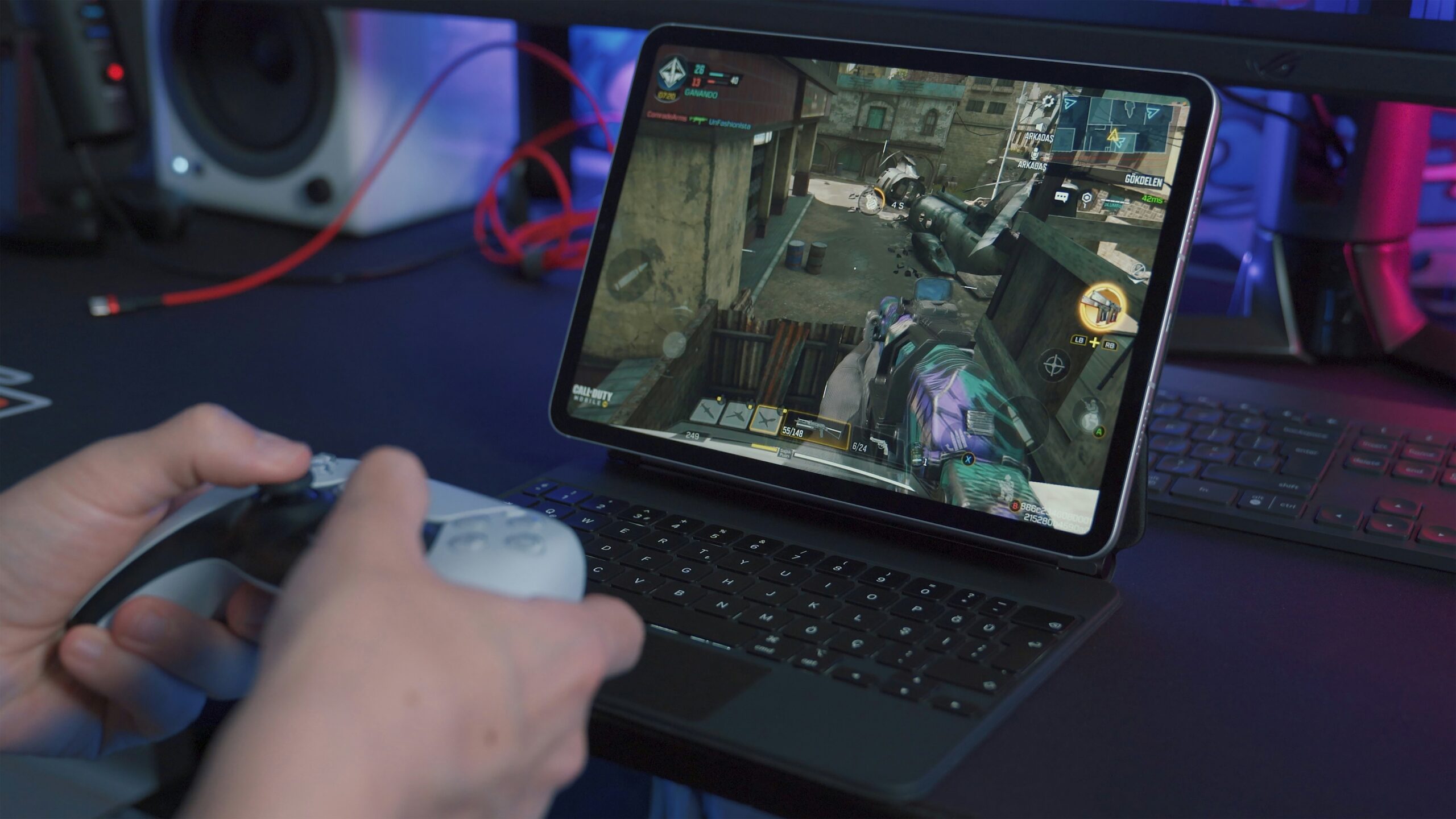
Furthermore, mobile devices aren’t limited to Android and iOS games. You can play PlayStation and Xbox games on smartphones with the Xbox Cloud Gaming and PlayStation Remote Play streaming services. There are also numerous emulator apps for playing retro console games on mobile devices, such as RetroArch and Delta. So, mobiles are a clear winner in the flexibility stakes as well.
Exclusive Games: Draw
It’s hard to say which is better for exclusive games, as both consoles and mobiles have their fair share of exclusives. The Nintendo Switch 1 and 2 are the best consoles for exclusives because the big N doesn’t port its games to other platforms. You can’t play games like The Legend of Zelda: Breath of the Wild, Metroid Dread, Super Mario Odyssey, Super Smash Bros. Ultimate, and Mario Kart 8 Deluxe beyond Nintendo consoles.
However, there are many exclusive mobile games designed entirely for touchscreen mechanics. Games like Subway Surfers, Alto’s Odyssey, Call of Duty: Mobile, Age of Empires Mobile, and Clash of Clans are more exclusive to smartphones and tablets. Such games aren’t available for consoles because they’re designed for touchscreen controls.
The Console vs Mobile Gaming Verdict…
The winner of this console vs. mobile gaming comparison is a resounding 5-1 victory for smartphones and tablets! Mobiles are more flexible, portable, multiplayer-oriented, and economical gaming devices with significantly larger game libraries than consoles. Graphical quality is the only area in which consoles clearly beat mobiles. With such advantages, it’s not surprising that mobile devices have become increasingly dominant in the gaming industry.














You must be logged in to post a comment Login